Case Study – Colchester Station Car Park Demolition
Client: Greater Anglia
Value: £600,000
Duration on site: 20 Weeks
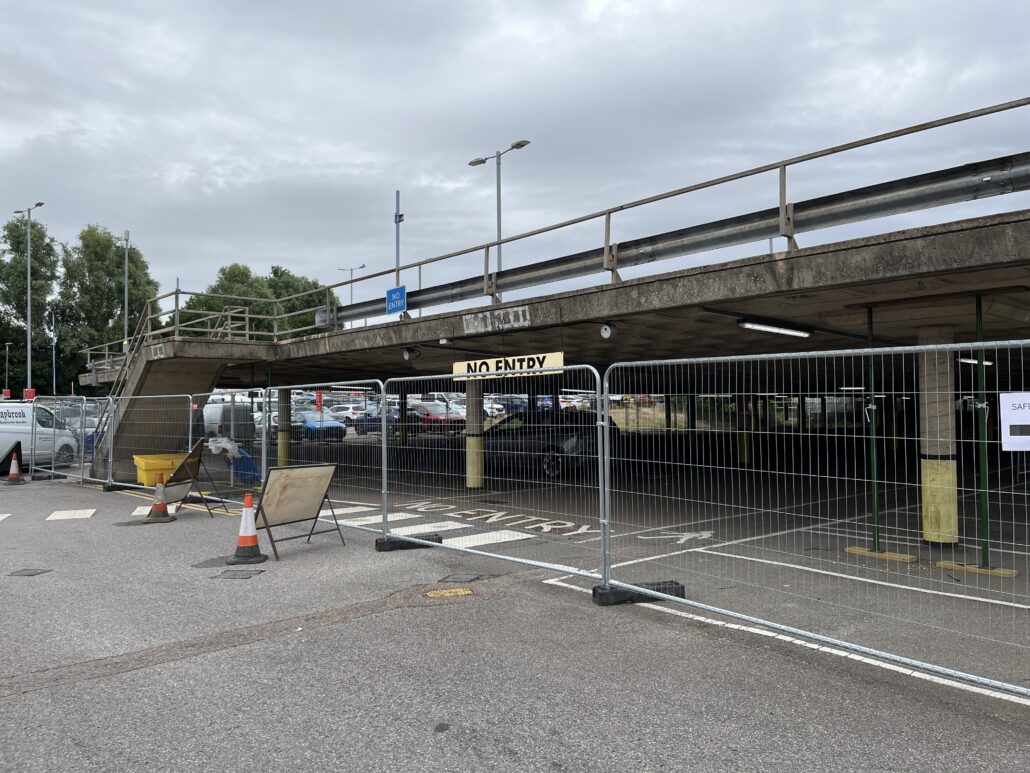
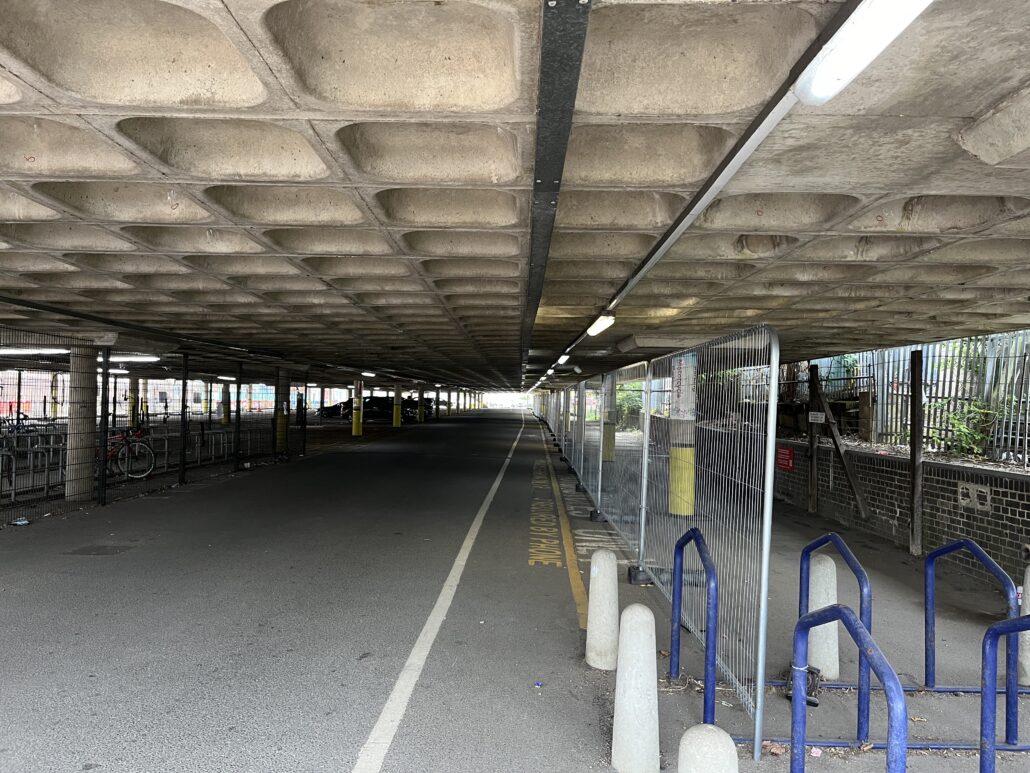
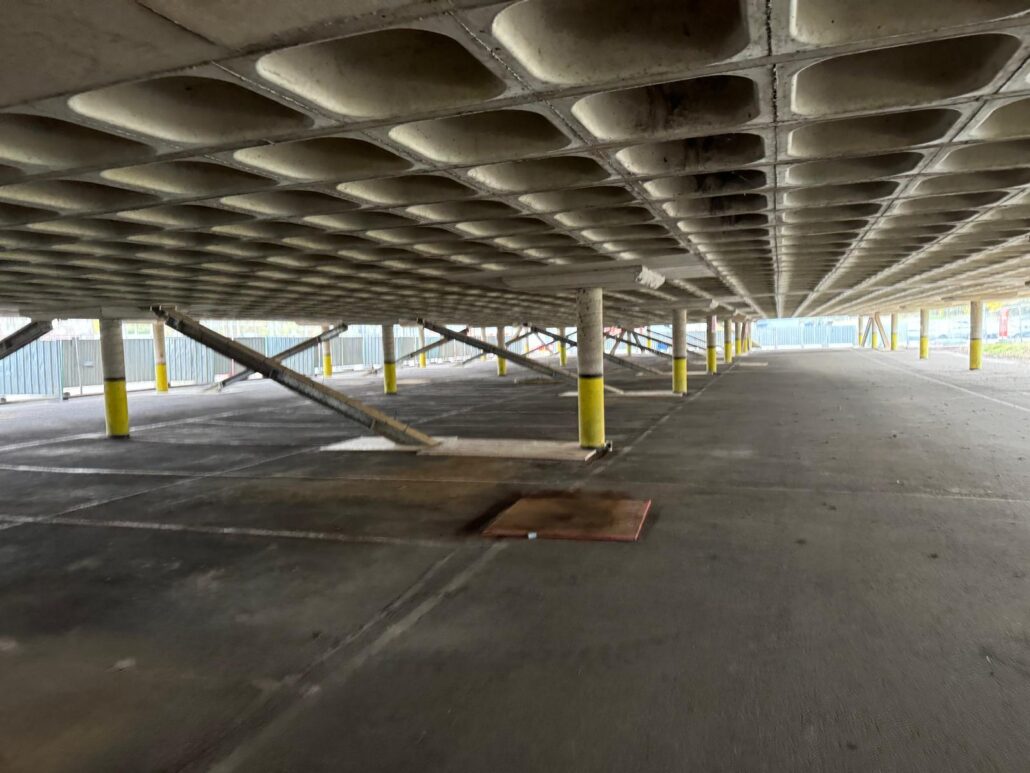
Capel CS Ltd were awarded the Contract by Transport UK East Anglia (Greater Anglia Rail) on 30th August 2024 to act as the Principal Contractor to undertake the demolition of the elevated car park deck at Colchester Rail Station. The existing 1200m2 deck car park, constructed in 1970, is a cast in-situ reinforced concrete structure. Following Structural Engineers surveys in 2024 it was deemed unsafe for use and in danger of collapse.
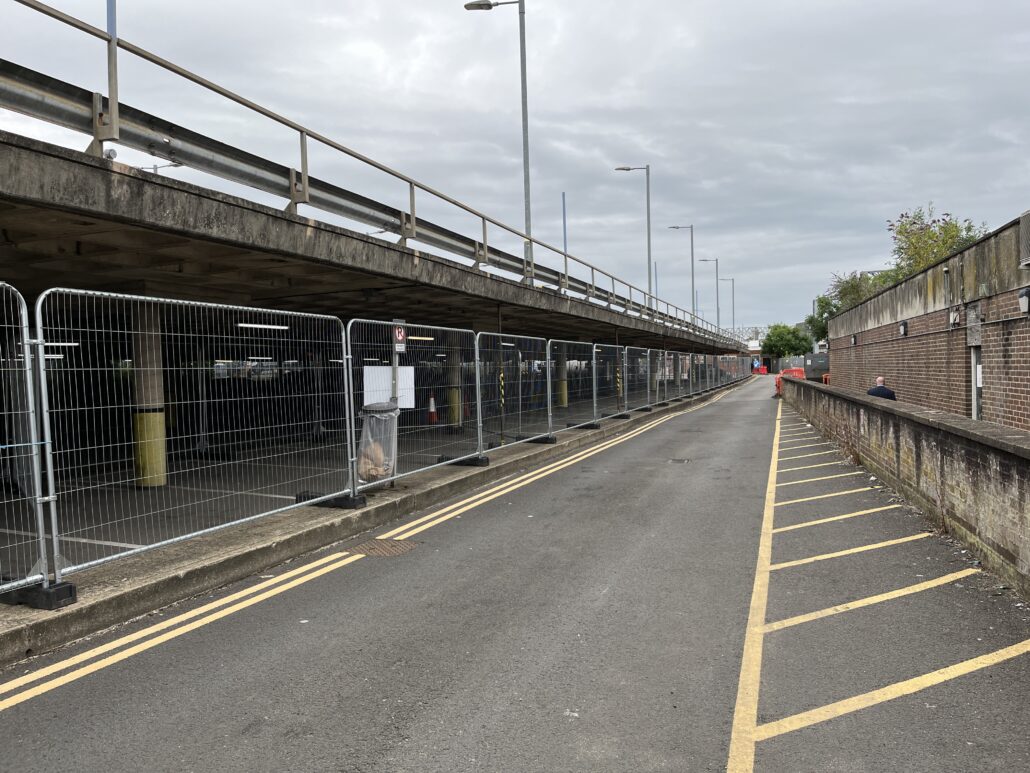
The deck is situated at the north side of Colchester car park with a single lane road passing between the deck and rail line, which provides access to the majority of the ground level parking for the station.
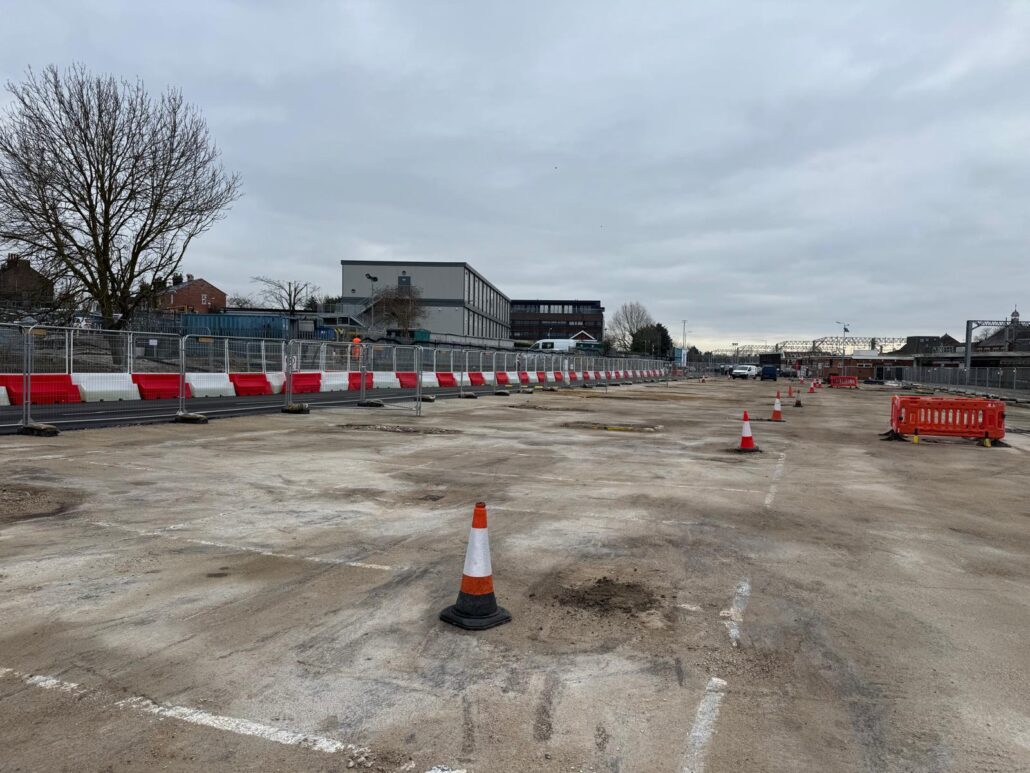
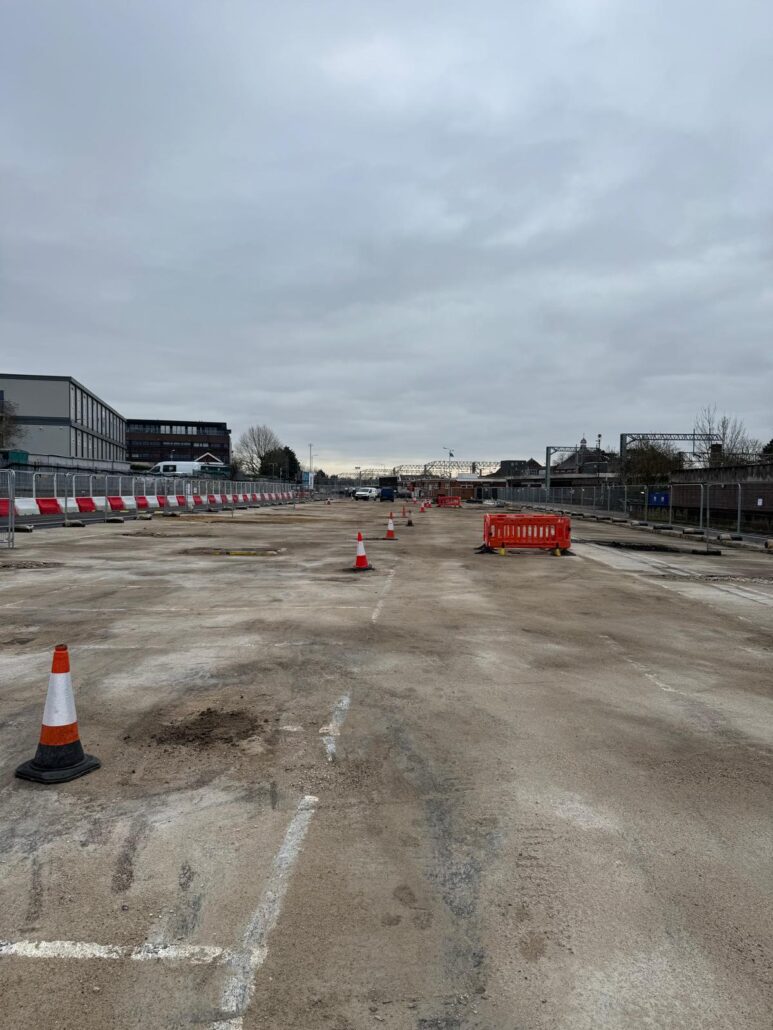
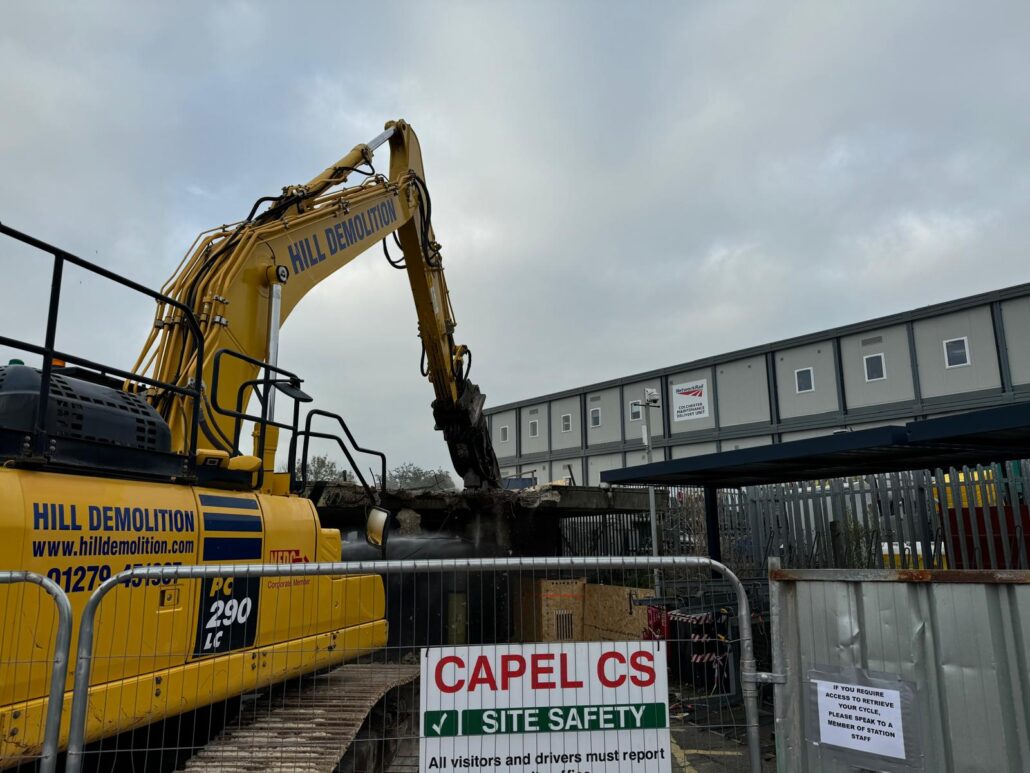
Capel’s scope of works for the project was to safely demolish the existing RC deck, including supporting columns and access ramps, to ground floor level in preparation for the remodelling of the ground floor parking in the same area at a later date.
Acting as the Principal Contractor for the scheme, Capel CS Ltd were responsible for the planning, temporary works design and execution of the works along with the establishment of the site welfare facilities, traffic management and pedestrian access routes. Close liaison with the station staff was also important to ensure both staff and members of the public were kept informed of the nature and duration of the works and units effect on the station and its environs including access routes.
Restrictions.
There were a number of major considerations in the planning and execution of the demolitions works:
1) Maintaining Access.
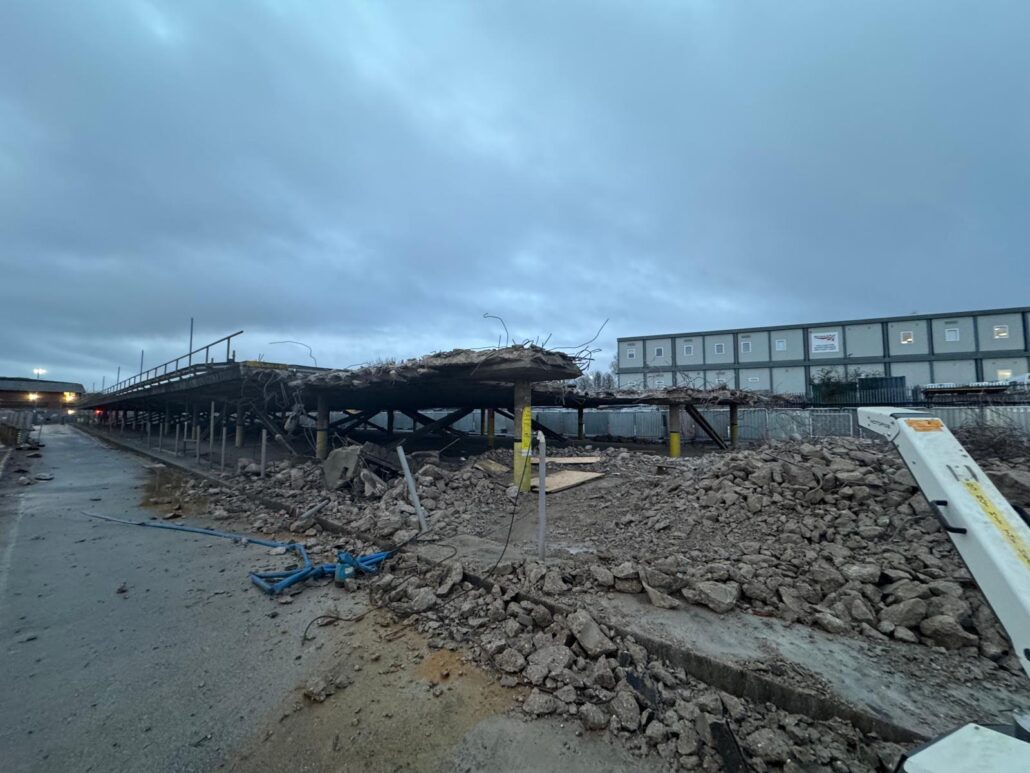
Maintaining public and staff vehicle access to the side of the deck slab during the demolition works. There were no other alternative access routes available to the station car park and staff offices so the works had to be phased to allow the existing access route to be kept operational throughout the works. The phasing of the works required one third of the deck to be removed to allow a new temporary access road to be formed for public and staff vehicles. Once this road had been installed, the remaining two-thirds of the deck could be safely removed.
2) Proximity to live running lines.
Although the deck was separated from the rail boundary by the existing access road, the potential existed for any unplanned collapse of the structure to foul the adjacent lines. Prior to the commencement of any works, a comprehensive ALO plan was developed and agreed with all relevant parties to ensure any risks to the running lines was mitigated. These measures included restricting the size of plant utilised for the works and the direction of demolition to avoid any potential of collapse towards the running lines.
3) Unplanned collapse.
Due to the condition of the existing deck and its construction type, there was a high risk of unplanned collapse of the structure during the demolition works. This risk was mitigated in a number of ways:
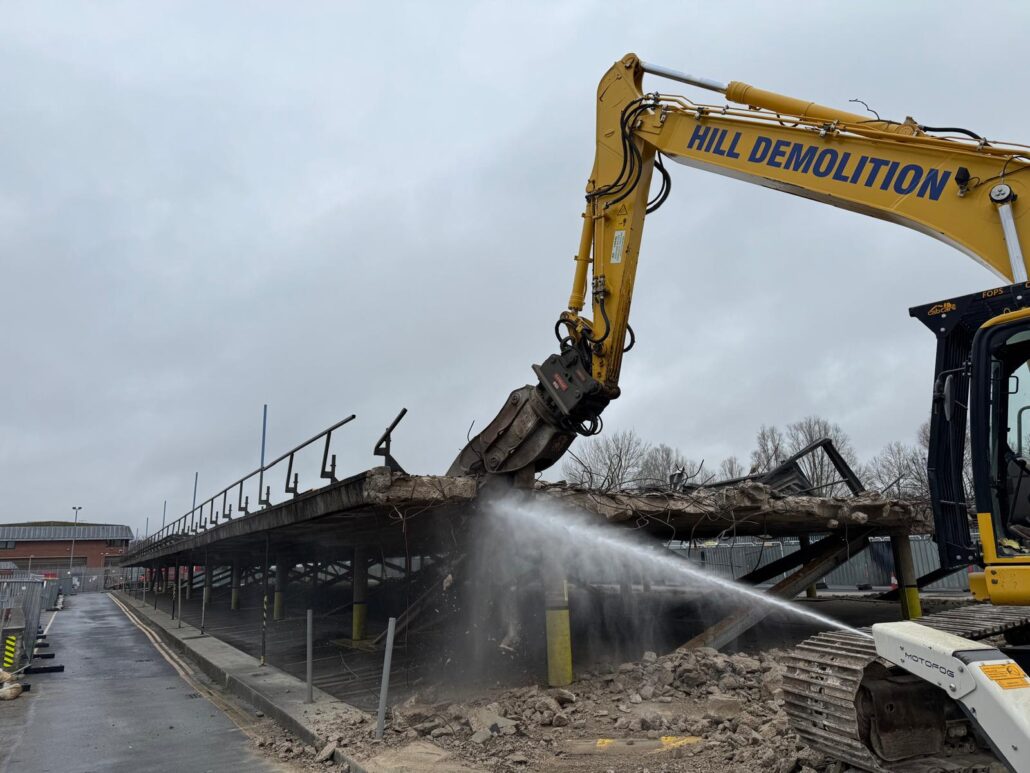
- The use of crushing method of demolition rather than percussion tools to reduce effect of loads on the structure during the works.
- Installation of a comprehensive temporary works system to support the structure as it was demolished. The temporary works structure, designed by our Structural engineers, involved the installation of more than 200 props and associated fixings to brace the structure whilst it was demolished.
Site Safety
The works were managed on site by a full-time SMSTS qualified Capel CS Site Manager who provided daily Task Briefings to all operatives prior to the commencement of the works in line with our H&S Policies. A suitably qualified TWC was also based on site carrying out daily inspections of the temporary installations. The Site Supervisor was supported by a visiting Project Manager and Health & Safety Manager who undertook regular site safety audits.
The demolition works were undertaken by suitably trained operatives.
Daily inspections of all access routes, hoardings and traffic management systems were undertaken to ensure compliance and integrity.
To ensure the safety of all members of the public, station staff and work operatives during the course of the works, a carefully considered logistics plan was implemented clearly detailing all access routes for the public, station staff and site operatives including heavy plant.
Large movements of plant, deliveries and removal of arisings were planned outside of the station busy periods to minimise congestion on the station access roads and full-maintained traffic management systems implemented to ensure no interface between the site traffic and station traffic.
The entire worksite was enclosed with fortress-style temporary fencing to minimise the risk of debris falling outside of the work site, as well as to prevent unauthorised access to the site.
Disabled parking bays and cycle shelters were relocated away from the car park deck area at the outset of the works to prevent the need for members of the public to park or travel near the work site.
Environmental Factors
Water suppress units were also implemented during the demolition process to control dust generation. Suitable road cleaning equipment was based on site to ensure access roads were kept clean a free of debris from the works. All arisings were removed from site to a recycling centre.
Due to the proximity of residential properties, no out-of-hours working was undertaken due to Nosie restrictions.
Letter-drops were made to all local residents prior to the commencement of the works to advise on the nature and duration of the proposed works.
Existing Concrete Decked Car Park
Progress Photos
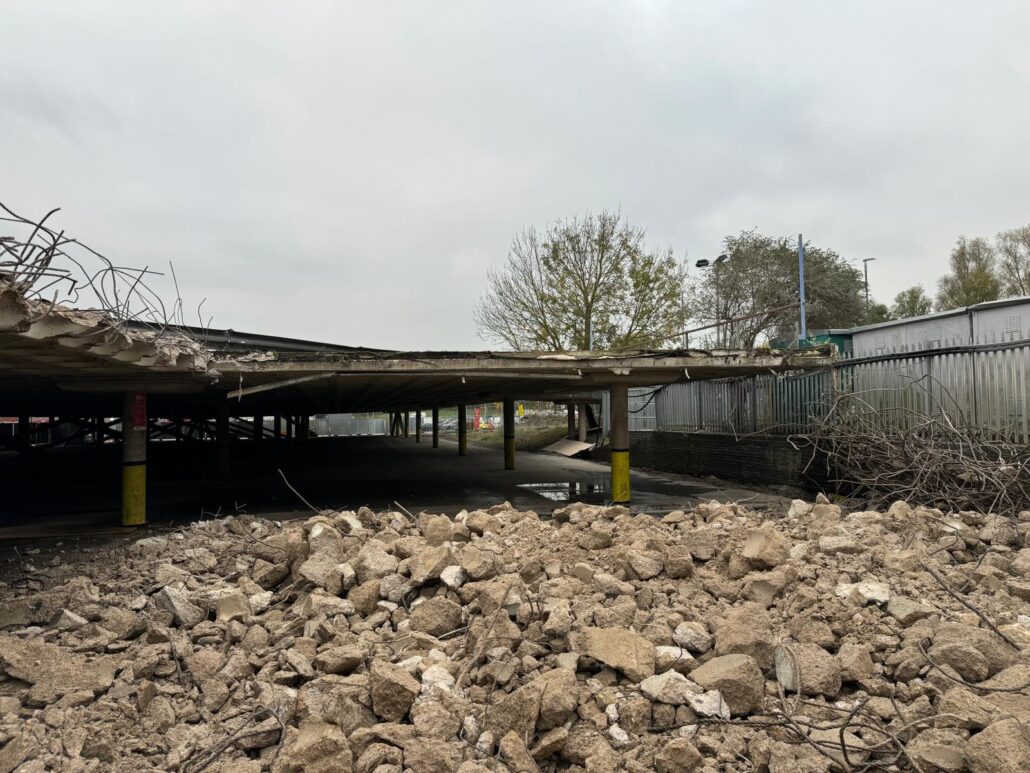
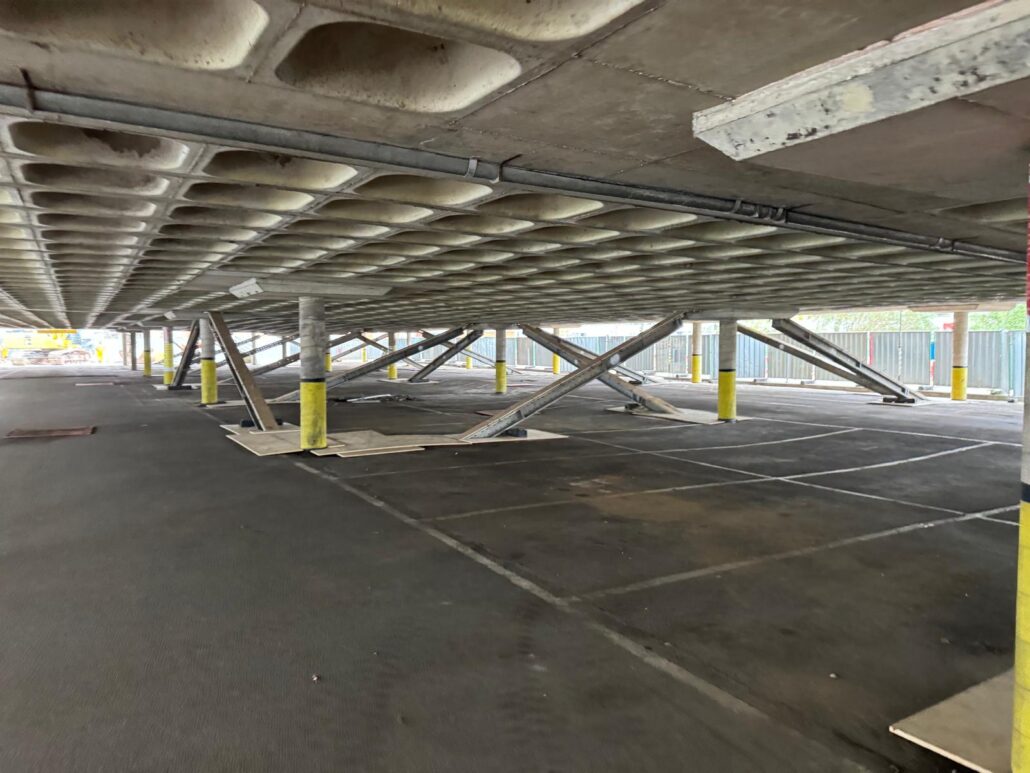
Completion Photos